
Schenectady Previous Residents by Era
A backward address search needs both property and household sources. The deed chain records transfers and legal descriptions. Directories and criss-cross volumes can show a printed occupant or business at an address. Census, maps, permits, probate, and obituary material add timing and family context. The starting source depends on the era, and no source should be asked to prove more than it contains.
| Source | Years it covers | Where held | What it can show |
|---|---|---|---|
| County Clerk deed index | Online first year not published; older material follows office and book routes | SearchIQS and Schenectady County Clerk | Grantor, grantee, recording date, legal description, reference, and possible image |
| City directories | 1841-42, 1857-58, 1860-1968 with stated gaps | SCPL, NYSL, and Digital History Archive | Address, trade, business, office, residence, and relationship clues |
| Criss-cross directories | From 1967; 1971 to the holdings-page endpoint | SCPL | Address-to-listed-name clues |
| Federal census microfilm | Schenectady County 1790-1930 at SCPL; later schedules follow the 72-year rule | SCPL and archival routes | Household relationships and period details as the schedule allows |
| Maps, rolls, permits, probate, and notices | Coverage varies by record set | Historical Society, city office or FOIL, Surrogate's Court, library, and archive | Building, parcel, owner, family, or event context |
Begin with the current parcel when the question concerns title or a property change. Begin with a printed directory or census year when the aim is to learn who lived there before. A missing online result may only mean the source is counter-only, on microfilm, or outside a published run.
Schenectady Previous Residents Start With a Parcel
Use the county-linked Beacon property route and the City assessment roll to capture the current owner, situs location, mailing address, parcel or print key, assessment date, and any sale or deed reference shown. Owner, situs, and mailing address are separate fields with different meanings. A tax mailing address is a contact point for correspondence, not evidence that the named person lives at the property.
Then use the City hosted parcel layer to match the parcel geometry and preserve the print_key, swis, secno, or swis_sbl identifier when present. The GIS layer supplies parcel features, not owner or mailing details. Its keys are useful bridges when old street text does not match a modern search exactly.
| Beacon field or control | Use for past-address research | Known limit |
|---|---|---|
| Municipality | Choose the City of Schenectady rather than another county municipality. | Exact live option wording was not located in official static text. |
| Owner name | Find the current assessment owner before beginning the deed sequence. | Exact matching and wildcard rules were not located. |
| Property address or street | Begin from the situs address and compare it to the GIS parcel. | Street-browse behavior and minimum characters were not located. |
| Parcel, SBL, or print key | Bridge a GIS parcel to the assessment and land-record trail. | Exact field format must be confirmed in the live service. |
| ZIP | May help narrow a parcel route when supported by the live property search. | Exact filter label was not located. |
The live Beacon interface is dynamic. Exact field labels, wildcard rules, and search limits were not located in the official static material, so confirm them on the live service instead of assuming a filter exists. Note: A current assessment roll is a dated property snapshot, not a roster of every person at the address.
Schenectady Previous Residents in SearchIQS
The County Clerk land-records page leads to SearchIQS and the public-search quick-start guide. Party 1 accepts a name or company, Party 2 supports paired searching, and an asterisk works as an unlimited wildcard. The default checks both party roles, while the guide explains how to narrow by party type. From and To date fields can narrow a period, and an asterisk in results signals that an image is available.
| SearchIQS control | Type | Required | Documented use |
|---|---|---|---|
| Party 1 | Text | No | Name or company; an asterisk is an unlimited wildcard. |
| Party 2 | Paired party text | No | The normal search begins in Party 1 and can include the paired party. |
| Ignore party type | Checkbox | No | When checked, searches a name without the Party 1 or Party 2 distinction. |
| From date / To date | Date pair | No | Accepts documented date formats; a blank To date means the current date. |
| View / Print | Result control | No | Opens or prints a selected result; an asterisk marks image availability. |
Save the grantor, grantee, document type, recording date, document number or book-page reference, legal description, and any prior reference visible in the record. An "UNVERIFIED Document" label can remain until verification, and a red result date signals that condition. Free index access does not make an image or copy equivalent to a certified record. SearchIQS does not publish its online first year in the reviewed source, so keep the County Clerk counter and older books in the workflow.
- Party name: Party 1 or Party 2 as indexed for an individual or company.
- Document type: The index category, with the full dropdown list not stated in the guide.
- Recording date: A sortable result date that can be narrowed with the date pair.
- Document reference: An index identifier or book-page equivalent whose exact label can vary by screen.
- Image access: An asterisk and View or Print controls indicate a potential document image.
- Verification: An "UNVERIFIED Document" label and red result date signal a record that remains unverified.
Schenectady County Record Alert is the County Clerk's free IQS notice service for future recordings under up to three personal or business names per email address and phone number. It is a current monitoring layer, not proof that a filing is valid or a substitute for reading the instrument.
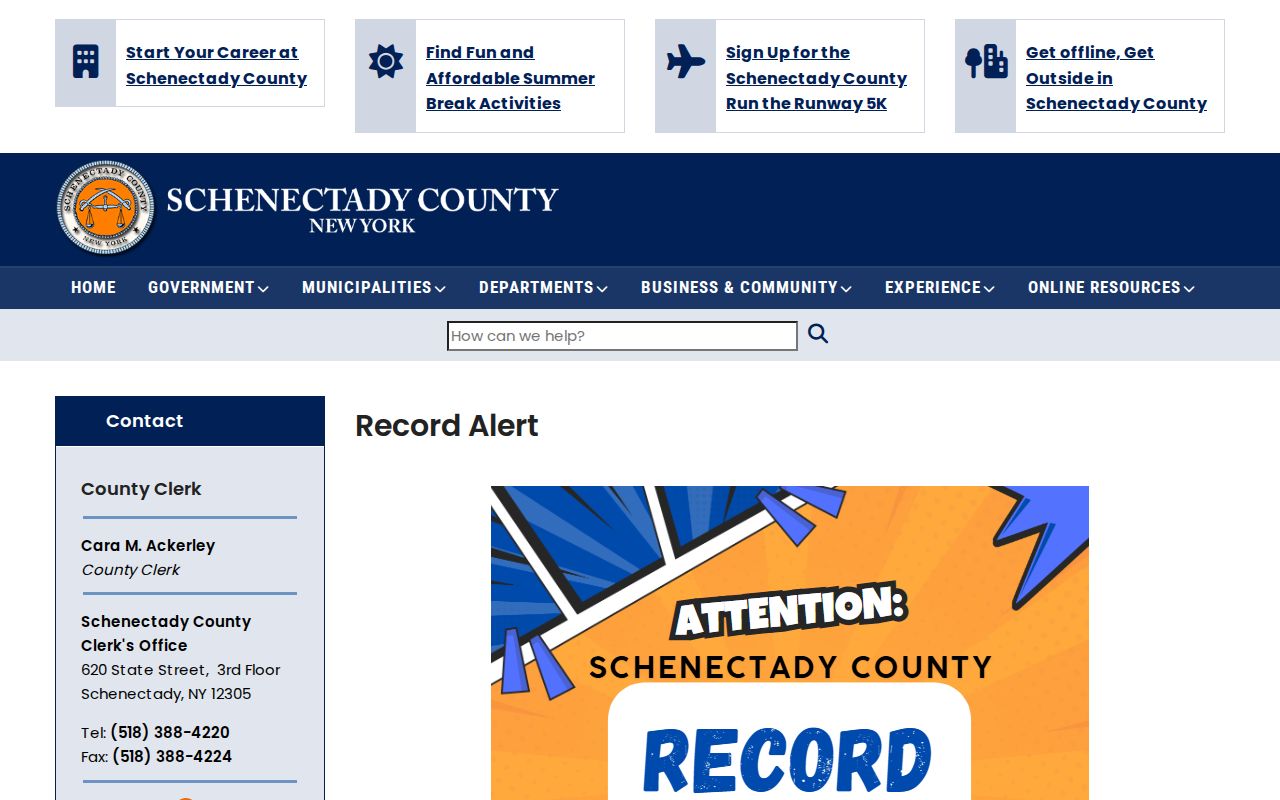
The alert service is useful after a deed review because it points to later recordings, while the historical chain still requires the index, document image or clerk copy.
Schenectady Deed Chains for Previous Residents
Start with today's assessment owner, then locate that person or entity as a grantee near the known acquisition period. The seller on that deed becomes the next person to search as a grantee. Repeat the sequence, recording a dated line for each transfer. Search married or former names, initials, trusts, companies, estates, and spelling variants when a direct name query fails.
- Copy the situs address, parcel key, and legal description from the assessment and deed material.
- Search the current owner as grantee in SearchIQS, using a date range or wildcard when the name is uncertain.
- Open the index entry or image when available and record the seller, date, reference, and legal description.
- Search that seller as a grantee to find the predecessor acquisition, then repeat the same recordkeeping steps.
- Move to County Clerk books, counter research, or clerk copies when the online trail ends because no official online-start year was found.
- Grantor / grantee
- The grantor transfers an interest in a recorded instrument; the grantee receives that interest.
- Chain of title
- The documented sequence of transfers for a parcel, traced through instruments and their references.
- Legal description
- The lot, parcel, map, or metes-and-bounds wording that identifies land more durably than an address string.
A transfer can involve an estate, trust, company, or beneficiary rather than a conventional sale. Keep the instrument type and its exact date with the chain, especially when a later document refers back to an earlier deed.
Schenectady Addresses Without a Renumbering Year
No official citywide Schenectady street-renumbering or renaming project with a year was located in the reviewed sources. That is a research gap, not permission to assign an old number to a current parcel. A directory may use a historic street form, omit a street section, print an office instead of a residence, or place a person under a different spelling.
Bridge uncertainty with the legal description, parcel key, adjacent street names, a historical street listing, and map geometry. The Historical Society house-history approach combines the 1850 city map, 1856 county ownership map, 1866 county atlas, city atlases from 1880, 1892, and 1905, and later Sanborn maps. City permits and code records can also provide date-and-address evidence, but a public permit-case database was not located. Request a defined address, date range, and record type from City Building/Code or through the city FOIL route.
Note: Keep the old address text beside the parcel and map evidence so a later researcher can see where continuity is supported and where it remains uncertain.
Schenectady House History at Grems-Doolittle
The Grems-Doolittle Library is an appointment-based source for deeds, maps, city directories, assessment rolls, wills on microfilm, newspapers, family files, cemetery records, and local organization material. Its house-history guide specifically combines directories, street guides, atlases, Sanborn maps, rolls, wills, and deeds. Arrange a visit at least two business days ahead, and use the catalog or finding aids to identify relevant material before arriving.
This is the library and counter fallback when a parcel or name disappears from online systems. It also helps separate an ownership question from an occupant question. The page-specific collection record may be a map, an atlas, a will, or a newspaper rather than another address index, so note the source type and date in each entry of a house-history worksheet.
Schenectady Sanborn Maps and Past Residents
Sanborn editions for the City of Schenectady listed in the local house-history guide include 1884, 1889, 1892, 1894, 1900 updated to 1912, 1914 updated to 1924 and 1929, and 1930 updated to 1949 and 1961. They can show building footprint, use, materials, address context, and neighborhood setting. They do not name every person who lived in a building.
Compare a map with a directory street entry, a parcel description, and an assessment or deed reference from the same era. A footprint can show that the building or lot changed, while the city directory can show the name or business printed at the address. This comparison is especially helpful when a present-day address search has no direct historical match.
Schenectady Past Residents in Directories and Census
Past residents are not always past owners. Use the annual city-directory entry and its street section for a printed name, address, trade, office, or residence clue, then compare the nearest census schedule for household relationships and period detail. SCPL holds Schenectady County census microfilm from 1790-1930. Later federal schedules are governed by the 72-year release rule. This creates a practical timing sequence without pretending that either source is complete.
- Choose the directory year closest to the period under review and copy the address exactly as printed.
- Read both the name index and the street or criss-cross listing, keeping business and residence wording distinct.
- Pair the result with the nearest available census year and record the source date separately.
- Check a map or parcel clue if the number or street form differs between records.
- Use an obituary, probate file, or later directory as a dated endpoint rather than guessing why a name disappeared.
The directory volumes themselves are covered in the Schenectady Directory Book. For address-order research, the criss-cross holding is often the bridge between a name search and an old house.
Schenectady city-directory and criss-cross holdings identify the city runs and reverse-directory intervals available for that comparison.
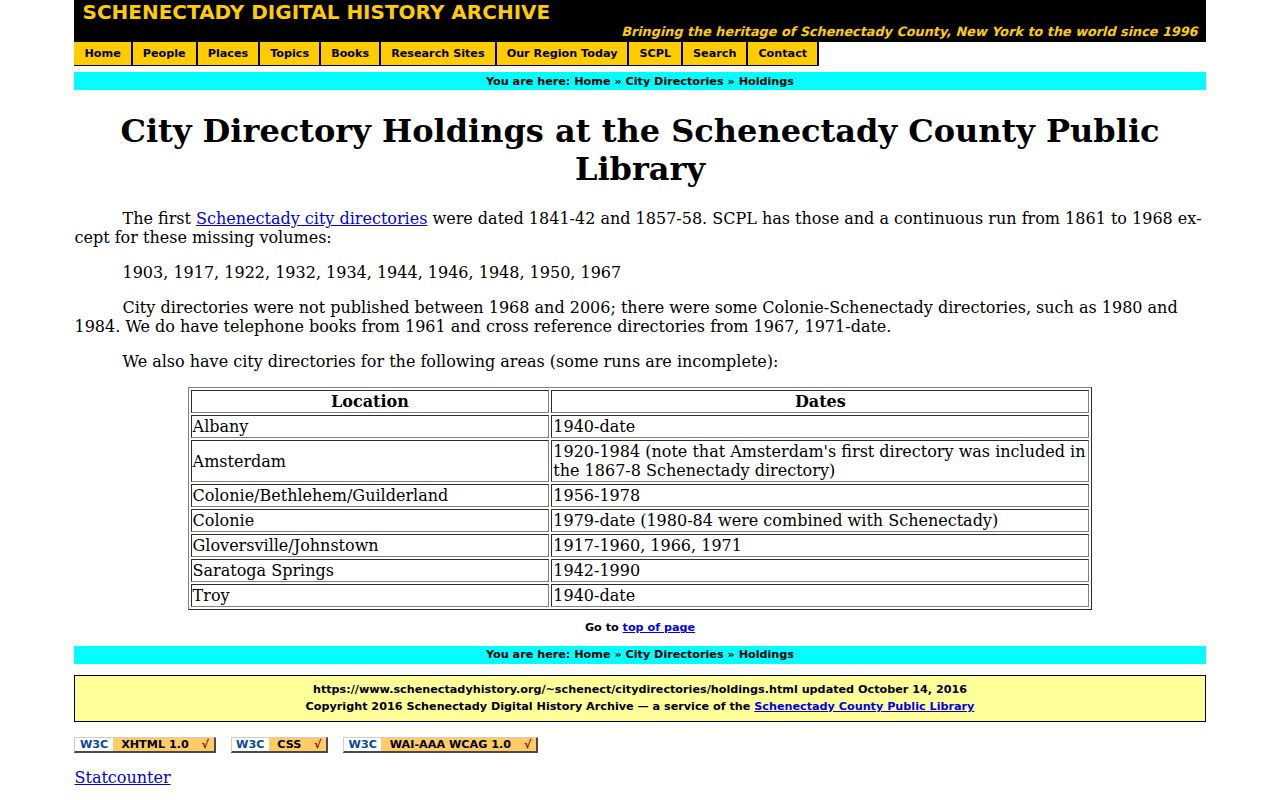
A criss-cross volume can provide a dated address lead, but it should be read alongside the directory year, census release rules, and the property's record trail.
Schenectady Previous Residents, Probate, and Obituaries
When an address trail reaches a death, estate, or transfer event, compare the local obituary index, newspaper holdings, and Schenectady Surrogate's Court records. An obituary can point to relatives, a former address, a funeral-home reference, or a death date. A probate file can identify a decedent, fiduciary, heir, will, or property-related clue. Neither source proves a later residence without a dated follow-up record.
The New York State Archives genealogy research path provides another public route for land, court, vital, military, and local-government research when a local collection is incomplete. State-held vital records remain subject to their access rules, and court or archival material can require a request, a counter visit, or a custodian's review.
New York State Archives genealogy resources show the statewide archival route that can supplement Schenectady address research.
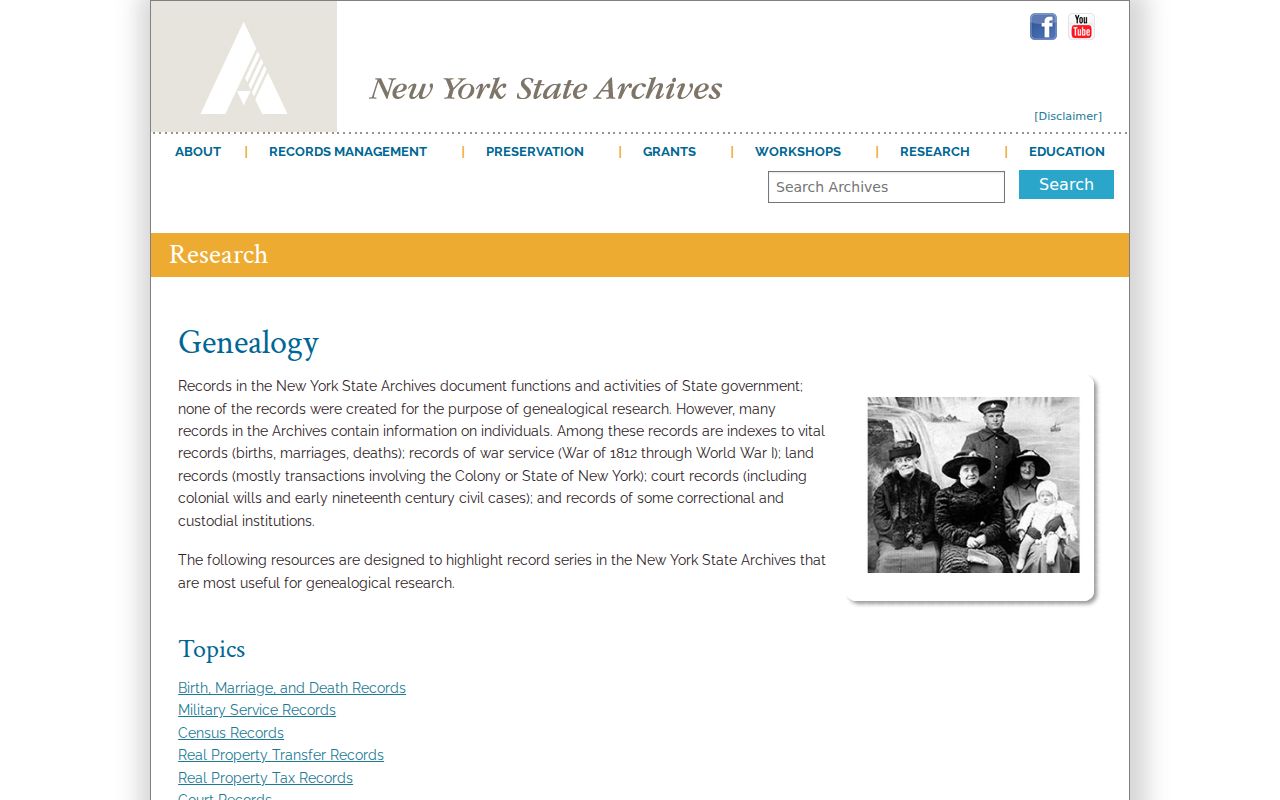
The archives route broadens the source list, while the property worksheet keeps each result tied back to the correct Schenectady address and era.
Schenectady Previous Residents and Lawful House History
Use an address trail for family history, neighborhood history, estate questions, local preservation, or personal property research. Record the custodian, source type, access date, and any gap. A deed, a directory line, a map, or an obituary may be wrong, incomplete, or about a different person with a similar name. Ask the County Clerk, library, Historical Society, court, or records office for the original or a defined request when verification matters.
Lawful house-history use. Schenectady previous-resident research is for a documented address history and personal, lawful inquiry. Do not use any result to harass, stalk, or harm a living person.
The County Clerk's Record Alert can help an owner notice later recordings, but it does not validate a deed and does not replace a title review. Note: Preserve uncertainty around the unverified online cutoff and no-official-renumbering-year gap rather than converting either into a false date.