
Schenectady City Directory Collections
Schenectady's local directory record begins with 1841-42, followed by 1857-58 and 1860-61. The Schenectady County Public Library holds a continuous city run from 1861 through 1968, with listed missing years. The Digital History Archive holdings page also identifies telephone books, regional volumes, and reverse directories that answer a different question: who was listed at an address. Treat each volume as a dated publication, not a complete census of every household.
| Collection | Years | Where held | Access route |
|---|---|---|---|
| Schenectady city directories | 1841-42, 1857-58, 1860-61, then 1861-1968 with listed gaps | SCPL; selected New York State Library film and fiche | Local research shelves and on-site film |
| Digitized city directories | 1841 and 1860 links currently exposed | Schenectady Digital History Archive | Free online page images and text |
| Telephone books | From 1961 at SCPL; 1945-47 and 1949-51 on NYSL film | SCPL and NYSL | On-site, non-circulating material at NYSL |
| Criss-cross directories | From 1967; 1971 to the endpoint on the holdings page | SCPL | Address-to-occupant reference |
The known gaps matter. The local run lacks 1903, 1917, 1922, 1932, 1934, 1944, 1946, 1948, 1950, and 1967, and no city directories were located for 1968-2006. Some 1980 and 1984 Colonie-Schenectady volumes survive, but they cover a broader area. Switch sources rather than treating a gap as proof of absence.
The First Schenectady City Directory
The digitized 1841-42 volume is titled Schenectady NY Directory and City Register, for the Years 1841-2. It was printed by J. & W.H. Riggs at 23 Union Street and describes heads of families, firms, businesses, occupations, and places of residence. Its compiler warned that the first attempt could be imperfect or erroneous. That warning is part of the record, especially when a surname seems to vanish or a street number looks odd.
The digitized 1841 directory can be browsed by alphabetical name, street, businessmen, clergy, Union College faculty, officials, and advertisements. This is a useful local story rather than a modern identity tool: it lets a family historian follow a person into the linked street list and see the year-specific neighborhood context.
The digitized 1841-42 Schenectady directory preserves the browse choices that make a name-to-street check possible.
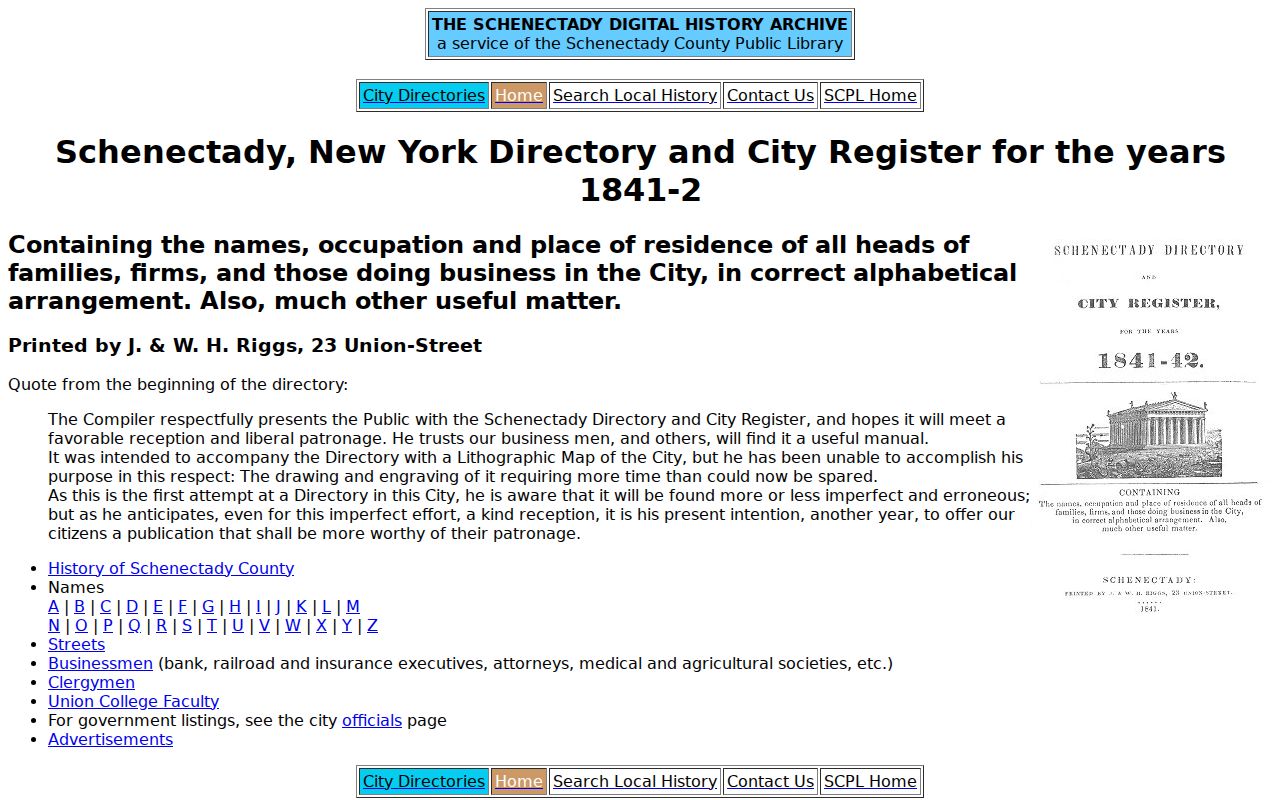
Use the linked street view as a period clue, then record the volume year before comparing it with later Schenectady city directories.
Schenectady City Directory Runs and Gaps
Annual entries make it possible to build a timeline between census dates, but publication is uneven. A person may be missing because a volume is missing, a name was indexed with initials or a former name, or an office was listed instead of a residence. The 1961 telephone-book starting point and the later criss-cross directories can bridge parts of the long city-directory break, although a phone listing is not by itself proof that a person lived at that address.
| 1841-42 | First identified Schenectady directory, later made available in the digitized archive. |
|---|---|
| 1861-1968 | Continuous city run at SCPL except the explicitly listed missing years. |
| 1961 | Telephone books begin in the SCPL holdings described by the archive. |
| 1967 onward | Criss-cross directories begin; the holdings page gives the later endpoint for the address-order run. |
| 1968-2006 | No city directories were located in the local holdings page for this interval. |
New York State Library lists Schenectady fiche for 1841/42, 1857/58, and 1860/61, plus film across several later spans. Its directories and telephone books do not circulate, so the fallback is an on-site visit rather than a downloadable replacement. Note: A source change is the right response to a listed directory gap, not a reason to silently fill the gap with an assumption.
Schenectady City Directory Shelves and Screens
SCPL local-history resources combine directories with Schenectady County census microfilm from 1790-1930, newspapers dating to 1822, atlases, yearbooks, and local government material. Those are practical counter alternatives when the digitized archive lacks the needed year. Some licensed databases have cardholder or on-site conditions, so confirm access before making a special trip.
The Grems-Doolittle Library adds deeds, maps, wills on microfilm, family files, church and organization material, newspapers, city directories, and photographs. Visits require an appointment at least two business days ahead. Its catalog and finding aids can help identify a likely box or volume before the appointment.
SCPL's local-history resource list shows the library layer that complements online city-directory pages.
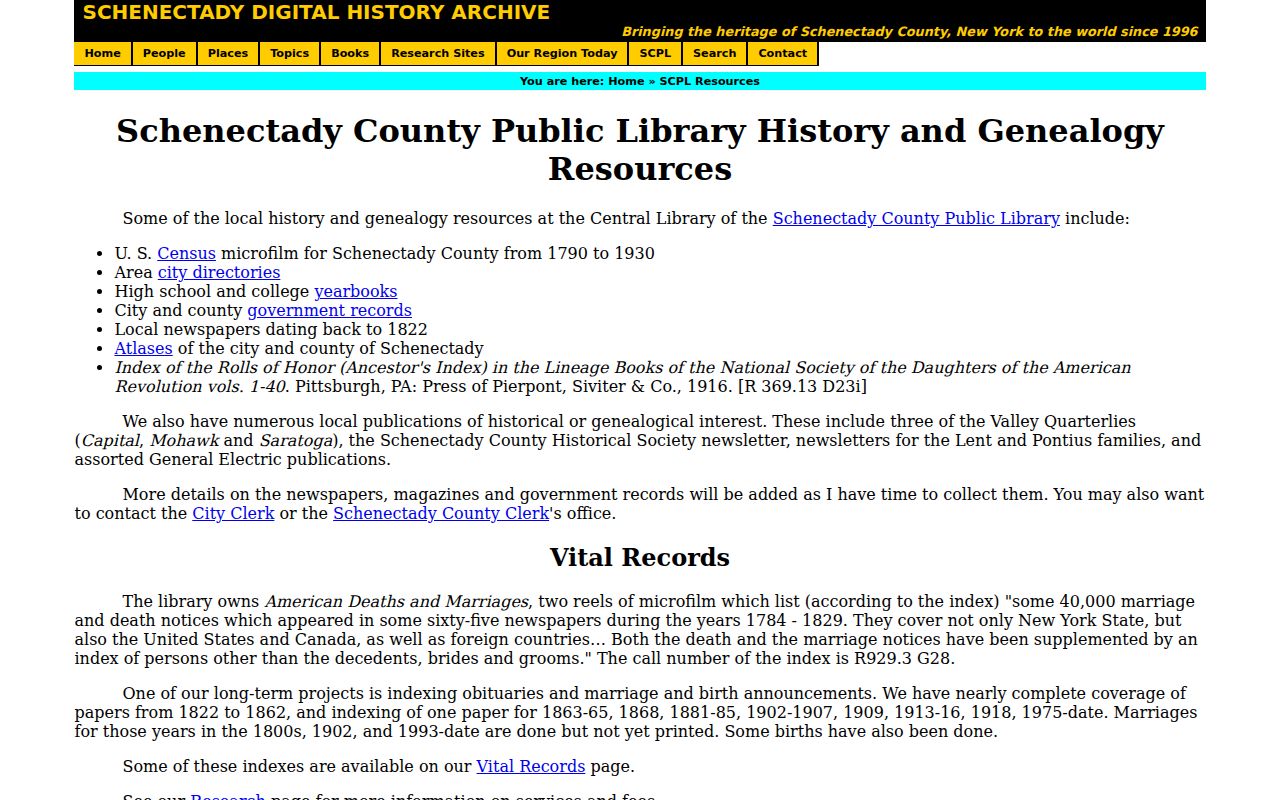
The library's census, newspaper, atlas, and directory holdings make it possible to test a directory line against another local record type.
Reading a Schenectady City Directory Entry
The 1841 entry style places surname and given name first, then a trade or business description and an address. It may separate office and residence, identify a hotel or boarding-house connection, say "widow of," or use a partnership rather than an individual's full name. A line is evidence of what the publisher chose to print for that year. It does not establish an entire household or a continuing address.
| Name | Surname followed by given or middle name; some entries use a widow, firm, or partnership form. |
|---|---|
| Trade or business | A period description such as baker, bookseller, tailor, engineer, or leather dealer. |
| Address | Street number and street, sometimes with a separate office or residence location. |
| Residence clue | Hotel, boarding-house, corner, shop, yard, or "near" wording that needs context. |
| Street connection | An address link may open the street list, which supports nearby-entry research for the same year. |
- Criss-cross directory
- A reverse directory arranged by address, used to find the listed name or business at a location.
- Householder index
- An alphabetical route to a listed person or household heading, rather than a guarantee of every resident.
- Abbreviation key
- The volume's explanation of shortened terms; capture it before interpreting a mark or address qualifier.
Keep the entry's date, page, and wording beside any transcription. A street number can be a lead into the printed street section, while a separate office or boarding reference needs its own historical context.
Schenectady City Directory Indexing Quirks
The 1841 archive ignores case, spacing, and punctuation in its sorting. It places Mac and Mc together, files St under Saint, and can show an entry without a given name. Search a surname in more than one form, and look for initials, a married or former name, a firm, or a street reference. Those choices are especially important when a name first appears only in a street list.
Occupation and address can narrow a result, but they should not be used alone to merge two people. Compare the printed year, a second directory, a census page, a newspaper notice, or a deed-related reference. Note: The compiler's own accuracy warning makes a careful spelling check part of sound Schenectady city directory research.
Schenectady City Directory Cross-References
Criss-cross volumes start in 1967, with 1971-to-current-endpoint coverage described on the holdings page. Their address order can help with a question about who was listed at a particular address in a particular edition. Check the holdings page for the current endpoint rather than assuming an issue exists. These volumes are complementary to the alphabetical city directory, not a substitute for title records or an occupant roster.
For a more recent address trail, the collections can support a historical check while the modern parcel and owner sequence belongs with the Schenectady Street Directory. Keep the document date and the type of listing together in research notes.
The holdings page for city-directory and criss-cross volumes is the best first check for an address-year combination.
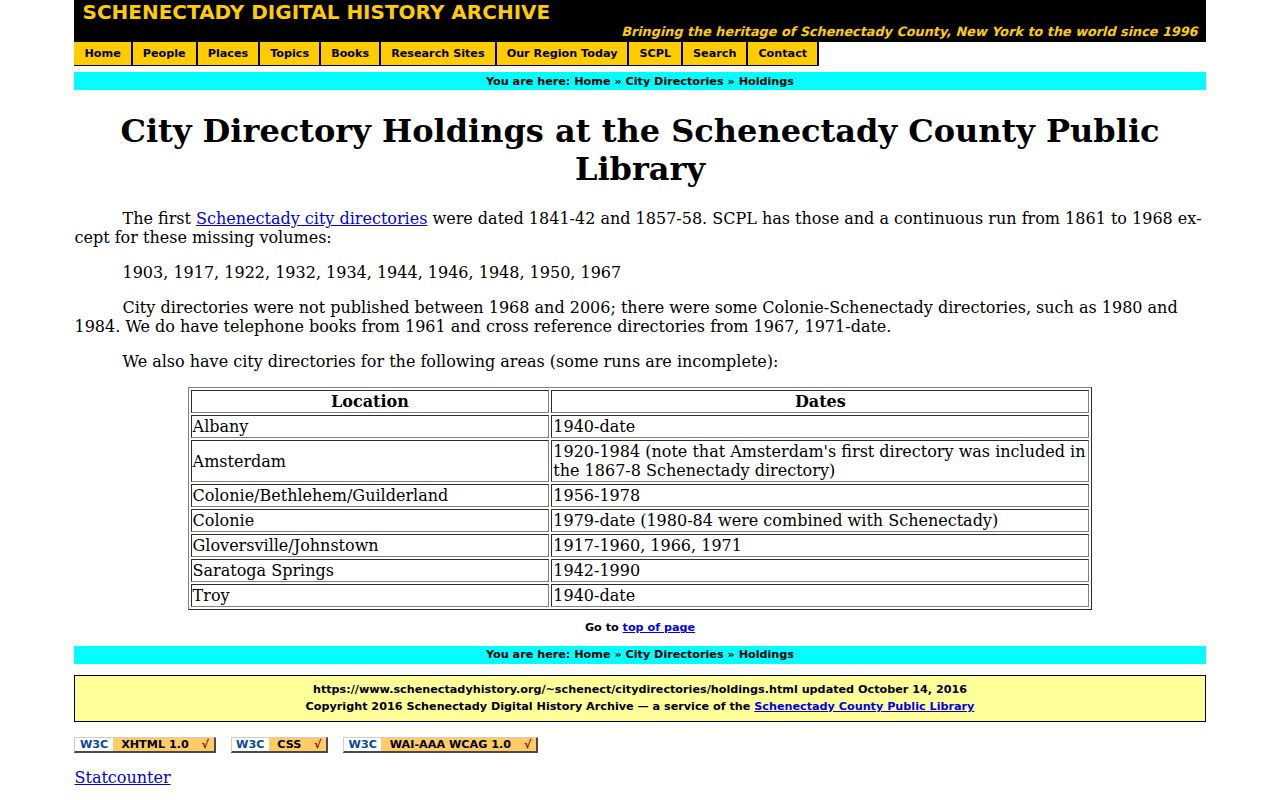
A reverse listing can identify a printed address match, but later research still needs to distinguish a listed person, business, office, or residence.
Tracing Schenectady City Directory Households
Follow a known surname or address through the available annual volumes and save the exact spelling, street text, occupation, relationship wording, and whether the entry points to an office or residence. Pair a directory year with the closest available census year. SCPL holds Schenectady County census microfilm from 1790-1930, while later federal schedules follow the 72-year release rule. The two sources answer different questions and should stay separate in the notes.
- Locate the earliest usable name or street entry and write down the printed form exactly.
- Check the street list as well as the alphabetical entry, keeping office and residence references distinct.
- Move through the next available directory years, marking each listed gap instead of inventing a continuity date.
- Compare the nearest census schedule for household relationships, age, and other period details the schedule provides.
- Use an obituary, probate clue, newspaper item, or map only as a dated cross-check for a move, death, or property event.
Disappearance from a directory can mean a move, death, different spelling, unlisted status, a gap in the volume, or a listing under a business or another address. The directory itself cannot choose among those explanations.
Schenectady Directory Leads for Former Classmates
For a former classmate or a family-history question, pair an old city-directory line with SCPL yearbooks, local newspaper access, and the archive's obituary index. These sources can establish a dated community connection without treating an old listing as a current address. The Historical Society also holds local organization, church, company, and photograph collections, but a finding aid is the appropriate request route when no open roster is described.
This human-use path works best when it stays tied to a year, school, street, or family relationship. It avoids turning a historical directory into a present-day people list.
Schenectady City Directory Trail Endpoints
The Schenectady obituary index contains fragments from the Schenectady Daily Gazette and other local papers with varying coverage back to 1795. Rows can preserve a surname, given name, verified maiden name, newspaper code, page date, death date when known, and notes. "DN" marks a death notice, while "DOH" marks a New York Department of Health row without an obituary date.
The displayed total changes as records are added. It is a strong pointer to a newspaper or family event, not a replacement for the original notice or a proof that a directory address remained current. Note: Record the index date and newspaper citation before relying on an obituary result to explain a directory change.
Schenectady City Directory Research Limits
Online pages are only one access channel. Use the Digital History Archive for the exposed 1841 and 1860 volumes, SCPL for local shelves, census film, newspapers, and yearbooks, New York State Library for non-circulating film and fiche, and Grems-Doolittle by appointment for its special collections. The Schenectady County Historical Society collections description is a useful discovery point for maps, deeds, wills, cemetery records, and local papers.
New York State Archives genealogy guidance is the statewide fallback for vital, land, court, naturalization, military, and local-government research paths.
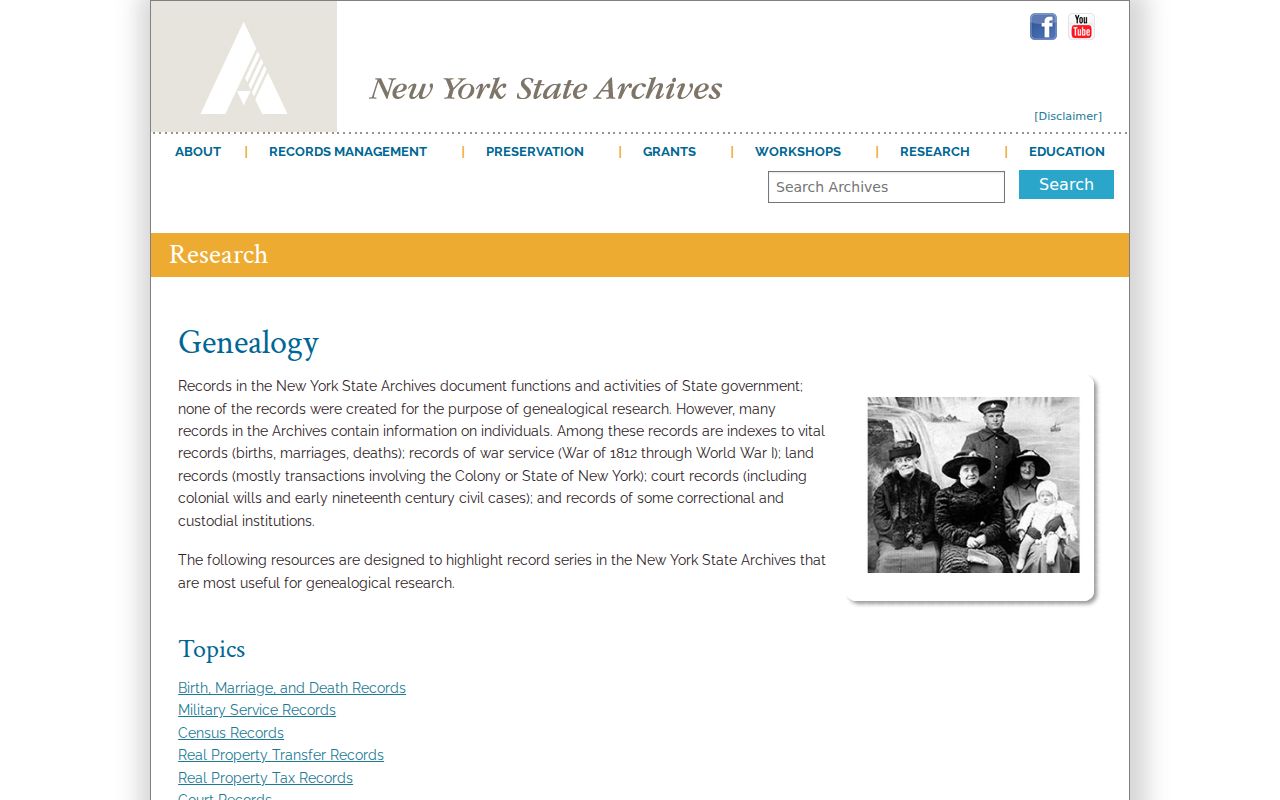
The archive guidance helps select a state-level series when the local directory shelves and digitized city run do not cover the needed period.
The Historical Society collections page introduces the special-collections route for a Schenectady city directory question that needs maps, family files, or local newspapers.
The appointment collection is a useful fallback when a digitized page or library shelf does not contain the needed city-directory year or supporting record.
For early research, remember that Schenectady County was established in 1809. Earlier deeds or family references can lead to Albany County ledgers and indexes. Use historical entries for family, local, and civic research, and do not use them to harass or track a living person. A modern name match still needs separate, current confirmation through the appropriate custodian.